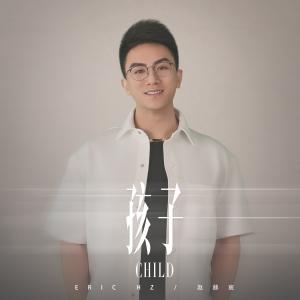
The Recording Academy’s newly unveiled Best Asian Pop Music Performance category has opened a significant conversation about how listeners evaluate music across languages and cultures — and Chinese singer-songwriter Eric HZ is adding his voice to that discussion.

Eric HZ (Hechen Zhao), a vocalist and music producer now based in the Dallas, Texas area, has submitted his original Mandarin-language track “Child” for consideration in the inaugural category. His reflections on vocal science, linguistic expression, and the nature of musical judgment arrive at a moment when the industry is broadening its recognition of Asian pop artistry.
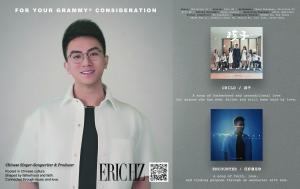
As Best Asian Pop Music Performance debuts, Eric HZ discusses Mandarin vocal expression, musical judgment, and the importance of informed listening.
Also worth a look: Track Review: Doechii “Denial Is a River” Is a Lyrical Tour de Force and Track Review: Rosalia “Abismo” Merges Flamenco and Industrial Electronics.
Mature artistic judgment requires not only an awareness of what we hear, but also a recognition of what we may not yet understand.”— Eric HZ (Hechen Zhao)
DALLAS, TX, UNITED STATES, October 13, 2026 /EINPresswire.com/ — The Art and Science of Listening — Part I
With the Grammy Awards adding a dedicated category for Asian pop, questions about how to fairly evaluate performances in unfamiliar languages have moved to the forefront. Eric HZ, who trained under Chinese opera performer and vocal educator Professor Wan Shanhong, offers a framework that balances technical scrutiny with cultural curiosity.
His approach starts with a simple but crucial distinction: some elements of a performance are immediately accessible to any listener, while others require deeper linguistic or cultural familiarity.
Pitch accuracy, rhythm, vocal timbre, breath control, phrasing, dynamic variation, and the management of musical tension can all be assessed without understanding a single word of the lyrics. But singing is never just about hitting the right notes — word meanings, linguistic stress, expressive subtleties, and cultural context all shape the choices a vocalist makes.
A language barrier does not render meaningful evaluation impossible, HZ argues. It simply means a listener may not fully grasp the expressive intentions behind a work.
“Mature artistic judgment requires not only an awareness of what we hear, but also a recognition of what we may not yet understand,” Eric HZ said in his written reflections.
Rather than advocating for a one-size-fits-all scoring system, his philosophy pairs careful musical analysis with a commitment to learning more — through lyrics, language study, and cultural context — and being willing to revise initial impressions when new understanding emerges.
The physiological mechanics of singing are universal: respiration, airflow regulation, vocal fold vibration, and vocal tract adjustments follow the same principles across traditions. Yet different languages introduce distinctive phonetic structures and prosodic patterns that shape articulation, timbre, and phrasing in ways that can dramatically alter a performance.
Mandarin Chinese offers a particularly compelling case study. In speech, lexical tones help distinguish word meanings; in song, pitch is simultaneously organized by melody. Mandarin vocalists must therefore navigate a complex interplay between lexical tones, melodic contour, rhythmic structure, and linguistic sense.
This does not mean every sung syllable must mirror its spoken tonal value. Musical context, articulation, rhythm, and semantic relationships all contribute to intelligibility. The result is that balancing linguistic clarity, melodic expression, and vocal technique demands artistic judgment — not mechanical rule-following.
“A mature vocalist should understand not only how to sing a note, but also why that note belongs at a particular moment, how it relates to the language, and what expressive function it serves within the phrase,” Eric HZ explained.
His reflections also caution against two opposing pitfalls: abandoning professional standards in the name of cultural relativism, or dismissing unfamiliar vocal qualities simply because they fall outside a listener’s established preferences. Technical command, stylistic appropriateness, musical coherence, and expressive intention remain essential criteria, he insists.
“The voice is the instrument of singing, language provides the material of expression, and the artist’s responsibility is to bring them together in service of the music,” Eric HZ said.
About Eric HZ: A Chinese singer-songwriter, vocalist, and music producer based in the Dallas, Texas area, he studied under Professor Wan Shanhong and serves as founder and chairman of the Chinese-American Federation of Arts and Culture (CAFAC), as well as founder and executive producer of the Chinese American Music Festival (CAMF). His Mandarin original “Child” is under consideration for Best Asian Pop Music Performance.
Music and artist information:
https://www.cafacofficial.org/eric-hz-child
Chris Jin
Chinese-American Federation of Arts and Culture
festival@cafacofficial.org
Visit us on social media:
YouTube
Eric HZ Performs “Child” at the 21st Chinese American Film Festival Golden Angel Awards
Why it matters: As the Grammy Awards expand to recognize Asian pop, the industry is confronting how to judge artistry across linguistic and cultural boundaries. Eric HZ’s framework — combining rigorous technical analysis with a commitment to cultural learning — offers a model for listeners, critics, and voters alike navigating this new terrain.