K-pop dreams no longer require a plane ticket to Seoul. A South Korean startup has built an AI-powered platform that lets aspiring idols train, get scored, and even audition using nothing more than a smartphone camera — and the world is already showing up in force.
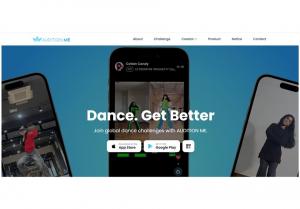
Audition-ME website interface | Image courtesy of KALAVINKA Entertainment
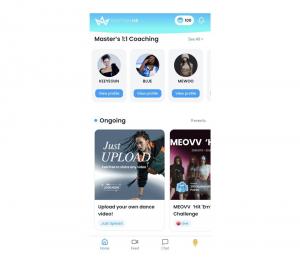
Audition-ME mobile interface | Image courtesy of KALAVINKA Entertainment
Also worth a look: Track Review: Doechii “Denial Is a River” Is a Lyrical Tour de Force and Track Review: Rosalia “Abismo” Merges Flamenco and Industrial Electronics.
Opening Global K-POP Auditions with Smartphones and AI
Our Platform Eliminates Expensive Sensor Hardware and Audition Travel Constraints by Deploying Smartphone AI Dance Coaching and Vectorized Choreography IP Monetization Tailored for K-POP.”— CEO Gyoung Youl Jeong of KALAVINKA EntertainmentPANGYO, GYEONGGI-DO, SOUTH KOREA, October 16, 2026 /EINPresswire.com/ — The company takes its name from a mythical Tibetan creature — half bird, half human — that was said to break into dance whenever it heard a flute. That legend now serves as the inspiration for KALAVINKA Entertainment (CEO Gyoung Youl Jeong), which is carving out a space in the global enter-tech market with its AI-integrated dance coaching platform, ‘Audition-ME.’
The service relies solely on a smartphone camera to meticulously break down a user’s dance movements and deliver tailored feedback. The goal is straightforward: make K-POP choreography accessible to anyone, without the need for costly sensors or specialized gear. The numbers reflect the momentum — roughly 140,000 users spanning 117 countries have already signed on.
What sets Audition-ME apart is its 2D and 3D skeleton-based motion recognition engine. When someone uploads a practice clip, the AI cross-references it against standard choreography, scrutinizing joint positions, body angles, timing, speed, and rhythm. Patented features handle real-time feedback, flag false errors, and calibrate for variations in height, body type, and proportions so that no user is unfairly scored. On top of that, the company holds a patent for converting dance movements and body data into unique time-series vectors — a system that not only safeguards choreographers’ rights but also opens the door for trading and monetizing choreography as intellectual property.
KALAVINKA operates on a three-tier business model. It begins with AI dance learning, moves into influencer marketing, and culminates in global commerce. The platform hosts dance creators and global celebrities — many with followings ranging from tens of thousands to hundreds of thousands — who help promote domestic beauty and lifestyle brands through product seeding and social media campaigns. From there, the company extends into cross-border trade, connecting local sales agencies, facilitating buyer matchmaking, and managing export distribution for K-brands eyeing international markets.
The company is also forging partnerships with domestic entertainment agencies and educational institutions. For agencies burdened by the high costs and logistical hurdles of scouting talent overseas, Audition-ME offers an AI-driven pre-screening process that slashes recruitment expenses. Recently, the platform brought on roughly 20 elite Korean choreographers to provide professional written feedback on user-submitted videos. And next month, it plans to roll out an advanced AI audition system that evaluates everything from Korean greeting etiquette and entry walking posture to the execution of assigned choreography.
Looking at the user map, India leads with 40,000 users, while Southeast Asia — including Indonesia (20,000 users), Thailand, and Vietnam — represents a substantial chunk of the audience. North America stands out for its active paid memberships and merchandise purchases, with additional growth coming from South America (notably Brazil) and Europe.
In Vietnam, KALAVINKA is running a 12-week AI dance Proof of Concept (PoC) with 300 youth participants alongside local educational institutions and NGOs. The initiative tests a system optimized for low-spec smartphones and limited bandwidth. After relocating from Seoul to Pangyo Techno Valley, the company is tapping into the area’s startup ecosystem and support infrastructure to push global expansion — and to shift from B2C into B2B, targeting dance academies and entertainment agencies.
Pangyo TV sat down with CEO Gyoung Youl Jeong at the Startup Campus in Pangyo Techno Valley to explore the platform’s AI coaching, choreography IP monetization, global creator commerce, and overseas growth plans. Reporter Thomas Frederiksen led the conversation.
Q1. Thomas Frederiksen, Reporter: Could you tell us a bit about your company and what you do?
A. Gyoung Youl Jeong, CEO of KALAVINKA Entertainment: KALAVINKA Entertainment provides a global AI dance coaching platform called “Audition-ME.” We currently have around 140,000 users across 117 countries worldwide. Users upload their dance videos, and our AI analyzes their performances. The AI provides real-time scoring and diagnostic feedback, functioning as a comprehensive entertainment platform.
Q2. What is the meaning behind the name “KALAVINKA”?
A. Gyoung Youl Jeong: The name “Kalavinka” originates from Tibetan mythology. It refers to a legendary creature with a bird’s body and a human face. According to legend, this bird begins to dance whenever it hears a flute. That story aligns perfectly with our platform’s spirit and mission, which is why we chose it as our company name.
Q3. Could you tell us more about the ecosystem you are building around your users and creators?
A. Gyoung Youl Jeong: Our core user base consists primarily of dance fandoms and aspiring K-pop idol trainees. Among them, we have a significant group of creators and global influencers—some with 10,000, 50,000, 100,000, or even several hundred thousand followers—who actively operate as influencers and celebrities in their respective home countries. Under our platform terms, they voluntarily register with us, and we manage them as part of our creator network. As a second business vertical, we leverage this creator network to match Korean brands looking to expand overseas with targeted global marketing and promotion. Recently, as overseas demand for these products emerged, we expanded into a third vertical: cross-border global commerce.
Q4. What specific problems does Audition-ME solve for aspiring dancers and entertainment agencies?
A. Gyoung Youl Jeong: “Audition-ME” literally means “Audition-ME!” Domestic Korean entertainment agencies often face significant challenges and high costs in discovering talent worldwide. Our platform drastically reduces discovery and travel expenses while providing global users with the fastest, most direct way to audition for Korean entertainment labels. Global users receive an objective, AI-evaluated preliminary assessment without needing to contact agency contacts directly. In turn, entertainment agencies use our platform to conduct efficient first- and second-round pre-screenings, creating a mutually beneficial matching platform for both sides.
Q5. How does the AI evaluate individual performances without requiring expensive motion-capture gear?
A. Gyoung Youl Jeong: Our AI analyzes motion using a source choreography video as the reference benchmark. It evaluates movement accuracy, execution speed, and body angle alignment. We hold patents on motion-recognition technologies, specifically for real-time coaching feedback and false-error detection. These proprietary capabilities elevate user engagement and drive organic user growth. Building on our core AI technology, we are developing a range of business models to scale globally.
Q6. How can creators protect and monetize their original choreography on your platform?
A. Gyoung Youl Jeong: Our AI evaluates motion, speed, height, weight, and body proportions. Each metric generates distinct numerical values that are mapped across time intervals to form a unique, complex motion vector. Because human body dimensions and dance nuances vary so extensively, no two vectors are identical. We hold a patent that assigns unique copyright identifiers to these motion vectors, turning original dance routines into protectable IP. This provides a technical and legal foundation for choreographers and dancers to claim copyright ownership over their newly created choreography.
Q7. Who makes up your primary user base, and how can institutions like dance academies and agencies adopt your technology?
A. Gyoung Youl Jeong: Our primary community consists of general dance enthusiasts and fandoms, followed by aspiring K-pop idols. Because our AI analyzes movement into vectorized data, it can deliver numerical scores alongside detailed verbal feedback. When dance academies implement this as a B2B coaching solution, it accelerates students’ skill progression while boosting the academy’s operational efficiency and revenue. Entertainment agencies are also showing strong interest in deploying our AI system for trainee evaluations. While we currently focus heavily on B2C, we anticipate substantial expansion into B2B sectors.
Q8. Which countries represent your largest user bases and most active markets?
A. Gyoung Youl Jeong: Our user demographics naturally reflect global population distribution. India represents our largest user base, with over 40,000 users, followed by Indonesia (20,000), Thailand, and Vietnam. We also have substantial user communities across the Americas—including the US, Mexico, and Brazil—as well as Europe. While Southeast Asia and India lead in overall active user volume, the North American market demonstrates the highest purchasing power. US users actively purchase in-app products, passes, and premium memberships. Recently, Brazil has also emerged as a strong contributor to our revenue growth.
Q9. What new features or upcoming services are you preparing to launch next?
A. Gyoung Youl Jeong: We recently signed contracts with over 20 top-tier professional Korean choreographers. Users can submit their dance clips to these mentors to receive detailed written critique and coaching—a new business model centered on expert feedback. Additionally, next month we are launching an end-to-end AI Audition Evaluation system. This system will analyze a candidate’s complete audition—from their Korean spoken greeting and walking posture to their dance execution and specific choreographic precision. These advanced AI business models will drive growth across both B2C and B2B channels.
Q10. Finally, what are the primary benefits of operating here at the Pangyo Techno Valley Startup Campus?
A. Gyoung Youl Jeong: We relocated to Pangyo about six months ago after previously operating in Seoul. Being situated inside Pangyo Techno Valley has been immensely beneficial. It facilitates networking with numerous fellow startups and provides access to Gyeonggi Province’s comprehensive startup support programs. Operating here provides vital momentum for our company’s ongoing growth.
Kim Seung Yeon
Gyeonggi Business & Science Accelerator
+82 31-776-4834
Visit us on social media:
LinkedIn
Instagram
Facebook
YouTube
Other
Why it matters: By removing the financial and geographic barriers that have long kept global talent out of the K-pop pipeline, KALAVINKA is effectively rewriting the rules of entertainment scouting. If its AI audition system gains traction with major agencies, the next generation of K-pop idols may be discovered from a living room in Brazil or a village in Vietnam — without a single plane ticket.