Launching an online radio station today is more accessible than ever—no transmitter or broadcast license required, and a standard computer is enough to get on air. But the real challenge isn’t the technology; it’s the sequence of choices made in the weeks before going live. RadioCult, a platform built for multi-host stations, has broken down this process into six critical decisions that determine how easy or difficult the station will be to run long after the first broadcast.
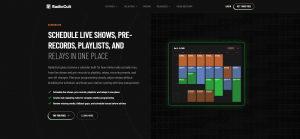
Before a single show airs, new stations can now build their entire schedule—mixing live shows, pre-recorded segments, and automated playlists—in one shared calendar. This advance planning is what separates a chaotic launch from a smooth one.
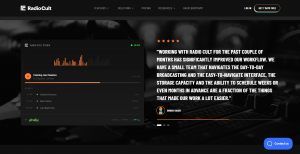
Once the station goes live, listeners aren’t left guessing either. The interface shows what is currently on air and what’s coming up next, keeping the audience engaged and informed.
Also worth a look: Maddye Trew flips Carrie Underwood’s classic on its head with new ‘Bathroom Polo’ video and Zhana+ TV bets on puppets, pirates and a chipmunk with 4 new family pilots.
Format, platform, music licensing, schedule and listener access: RadioCult sets out the decisions a new online radio station makes before going live.
When the format, the licensing, and the schedule are settled early, the tools can be chosen to fit the station.”— A RadioCult spokespersonNEW YORK, NY, UNITED STATES, November 12, 2026 /EINPresswire.com/ — The first and most foundational decision is the station’s format. This isn’t just about genre; it’s about operational structure. The two key questions are live versus pre-recorded content and manual versus automated control. Live shows offer real-time interaction but require a presenter at the controls, while pre-recorded segments can be produced ahead of time and scheduled to air at any hour. Similarly, a manual station has someone actively choosing what plays, whereas an automated, mix-based station uploads shows or playlists and lets the schedule run them on its own. Most stations end up combining both approaches, using live shows during peak hours and automation to fill the rest. The number of people involved also matters: a solo operator needs minimal access control, but a station with multiple presenters needs separate logins and limits on who can broadcast and when.
The second decision is the platform itself. The primary fork in the road is between running a self-managed streaming server or using a hosted platform. Free, open-source options exist, but they trade a lower upfront cost for significantly more setup and ongoing maintenance. The easiest platform to launch online radio on isn’t defined by any single feature, but rather by how many separate tools a station has to connect before it can go live. Broadcasting, scheduling, a web player, listener chat, and analytics can each come from a different vendor, and every additional tool adds setup work and another potential point of failure. RadioCult bundles all of these—live and automated broadcasting, scheduling, station and artist management, embeddable players, chat, and analytics—into one platform, with plans starting at $33 a month.
Music licensing is the one legal step that cannot be postponed. While an online radio station doesn’t need a broadcast license, playing copyrighted music requires the appropriate music licenses before the first broadcast. Two sets of rights are involved: the rights in the song itself (the composition) and the rights in the recording. These are typically cleared through collecting societies in the station’s country of operation. In the United States, that means performance rights through ASCAP, BMI, or SESAC, plus sound recording royalties through SoundExchange. In the United Kingdom, PRS for Music covers songwriters and composers, while PPL covers recordings and performers. Fees vary by country, audience size, and whether the station is commercial or non-commercial, so stations are urged to confirm terms directly with the societies rather than rely on estimates. Stations playing only their own music or royalty-free tracks face different requirements.
The stream and schedule come next. A station broadcasting live needs an encoder on the presenter’s computer, with free options like BUTT and Mixxx being widely used. A station running only pre-recorded shows or playlists doesn’t need one, as the platform plays the audio directly. Building the schedule before launch is a crucial step: regular shows at set times, repeating rules for weekly slots, and automation filling the gaps keep output consistent from day one. On RadioCult, live shows, pre-records, playlists, and relays all sit in one shared calendar. DJs can be limited to their assigned slots and are automatically disconnected when their time ends. Testing the stream on several devices before launch catches level and bitrate problems before listeners ever hear them.
Listener access is simpler than many new station owners expect. A website is useful but not required to go live. An embedded player can sit on an existing site or on social profiles, and a basic site needs only a listen page, a schedule, an about page, and contact details. Stations on RadioCult also appear in the RadioCult listener app for iOS and Android—a shared app rather than a station-branded one—so listeners can tune in on a phone before the station has its own website.
Measurement and revenue come after launch. Once listeners arrive, real-time analytics show which shows draw an audience, when listening peaks, and where listeners are located. RadioCult’s analytics do this without collecting personal data. Revenue from advertising, sponsorship, listener support, or merchandise typically follows the audience, so most independent stations build their listenership before deciding how to monetize it.
“Most of what makes a station easy or hard to run is decided before the opening broadcast,” said a RadioCult spokesperson. “When the format, the licensing, and the schedule are settled early, the tools can be chosen to fit the station.”
A practical approach, according to RadioCult, is to write down the station’s format, its schedule for the opening month, and who will be on air, confirm the music licenses needed, and then choose the platform that covers all of that with the fewest separate pieces. Every RadioCult plan can be tried for seven days, long enough to build a real schedule and test the stream before launch.
About RadioCult
RadioCult is an online radio hosting platform built for independent and community stations that broadcast 24/7 with multiple presenters. It combines live and automated broadcasting, radio-native scheduling, station and artist management, and unlimited concurrent listeners in one platform, with human support and pricing that starts at $33 per month. Learn more at https://www.radiocult.fm.
Corey Haines
Conversion Factory
Visit us on social media:
Instagram
Facebook
X
Why it matters: The barrier to entry for online radio has never been lower, but the difference between a station that thrives and one that fizzles out is often determined before the first song plays. By forcing aspiring broadcasters to think through format, licensing, and scheduling upfront, RadioCult’s guide highlights that preparation, not just passion, is what sustains a station over time.