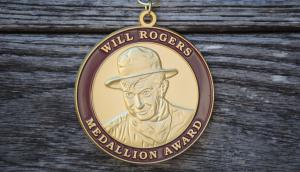
The Will Rogers Medallion Awards have begun accepting entries for their 2027 competition, signaling another year of celebrating the American West through the written word. The call for submissions, which opened November 1, invites authors, poets, publishers, and storytellers of all stripes to submit works that carry forward the legacy of the famed humorist and philosopher.
GRASS VALLEY, CA, UNITED STATES, November 11, 2026 /EINPresswire.com/ — The competition’s broad category list reflects the diversity of Western storytelling. Entrants can choose from traditional and modern Western fiction, historical fiction, mystery, biography, memoir, nonfiction, romance, inspirational books, humor, poetry, cookbooks, photographic essays, and books for younger readers. Notably, Western Gothic & Supernatural Fiction is also among the categories, expanding the definition of what a Western story can be.
Complete entry guidelines, eligibility requirements, and submission deadlines are available at www.willrogersmedallionaward.net. Organizers stress that entrants should carefully review the requirements before preparing submissions, particularly the format specifications for recorded poetry, individual short stories, and short nonfiction.
Also worth a look: CommHIT marks 15 years by launching a statewide rural care network from NASA’s space center and Salem Baptist Church and Omaha Performing Arts unite for a deep dive into gospel music’s legacy.
“The American West continues to inspire extraordinary stories, and we want to recognize the people bringing those stories to life,” said Chris Enss, executive director of the Will Rogers Medallion Award. “Whether an author writes about frontier history, contemporary Western life, or a child’s first adventure in the saddle, these works help carry our storytelling traditions into the future.”
The program’s previous honorees include Grammy Award-winning country artist Clint Black; New York Times bestselling authors Craig Johnson, Anne Hillerman, and Reavis Wortham; and filmmakers Peter Billingsley and Vince Vaughn. That roster underscores the organization’s appreciation for Western storytelling across multiple creative disciplines.
The competition offers opportunities for writers working in many different forms. A meticulously researched biography, a collection of poetry, a magazine essay, and an illustrated children’s book each have a place within the categories. Together, those categories reflect the variety of voices and approaches that keep Western subjects before readers.
Fiction categories encompass stories set in different periods and written for different audiences. Western Fiction – Traditional recognizes works set before 1900, while Western Fiction – Modern covers works set after 1900. Separate categories recognize Western Mystery, Western Historical Fiction, Western Gothic & Supernatural Fiction, and Western Fiction Romance.
Western Fiction Short Stories accepts an individual fiction short story published in a magazine or a single story included in a collection of short stories. Entrants should distinguish this category from those for complete books and follow the submission instructions for the individual work being entered.
Nonfiction categories include Western Non-Fiction and Western Biography & Memoir, providing recognition for works exploring Western history, experiences, and individual lives. Western Photographic Essays and Western Cookbooks offer additional avenues for presenting the region’s people, places, and traditions through images, research, and food.
Western Inspirational Books accepts both fiction and nonfiction. Western Humor accommodates a book, short story, or newspaper or magazine article, recognizing that Western storytelling includes laughter as well as accounts of struggle, achievement, adventure, and change.
Four poetry categories recognize written collections and recorded work: Cowboy Poetry – Recorded/CD, Cowboy Poetry – Written, Western Poetry – Recorded/CD, and Western Poetry – Written. Recorded poetry submissions must include both an MP3 file and a CD.
The written poetry categories accept books only. There is no category for individual poems. Poets and publishers should review these distinctions when selecting a category and assembling the materials required for judging.
Books for children and teenagers are represented through five categories: Western Fiction – Young Readers, for ages seven through twelve; Western Fiction – Young Adults, for ages thirteen through eighteen; Western Fiction – Young Readers – Illustrated; Western Non-Fiction – Young Readers; and Western Non-Fiction – Young Readers Illustrated.
These categories recognize the role that books can play in introducing young people to Western history and storytelling. Illustrated works, factual accounts, and fictional adventures offer different ways to engage readers as their interests and reading abilities develop.
“Keeping the written word of the West alive means making room for the next generation of readers and writers,” Enss said. “Books for young people are an essential part of that effort. They encourage curiosity, invite questions, and can begin an interest in history that lasts a lifetime.”
The Western Short Non-fiction category accepts an article or essay about the American West appearing in a printed publication, with a word count between 1,000 and 5,000 words. This category has specific requirements concerning the form in which the work must be submitted.
Entries must be provided in their original published form. For example, an entrant should submit the entire magazine or newsletter containing the article rather than a photocopy. If the article appeared exclusively in a digital online magazine, a printed copy may be submitted.
If an article is adapted from a book, both the book and the article must have been published during the required previous year. Entrants are encouraged to consult the official guidelines to confirm publication eligibility and ensure that all required materials accompany their submission.
The range of categories gives publishers and writers an opportunity to consider Western work beyond a single familiar genre. Stories of the West can take the form of a mystery, a memoir, a cookbook, a photographic essay, or poetry meant to be heard aloud.
At the center of the program is a commitment to recognizing the written word and honoring the tradition associated with Will Rogers. The annual competition invites participants to contribute to that tradition through works that bring Western subjects to audiences of different ages.
Through this annual recognition, the organization encourages continued interest in Western literature and invites established voices and new participants alike to share work that reflects the richness of the American West’s storytelling heritage.
Authors and publishers preparing entries should consult the official website for the complete rules rather than relying solely on category descriptions. Reviewing the guidelines before submitting will help entrants identify the appropriate category, provide the correct materials, and meet the published deadlines.
For entry information, guidelines, and submission deadlines for the 2027 Will Rogers Medallion Awards, visit www.willrogersmedallionaward.net/contest-info.
Why it matters: The Will Rogers Medallion Awards provide a rare platform dedicated exclusively to celebrating the American West across all literary forms, from poetry to cookbooks. By honoring both established names like Clint Black and Craig Johnson and emerging voices, the program ensures that Western storytelling—whether traditional or modern—remains a vibrant and evolving part of American culture.
Chris Enss
Will Rogers Medallion Award
+1 916-216-0995
Visit us on social media:
Facebook