The Recording Academy’s decision to add Best Asian Pop Music Performance at the 69th GRAMMY Awards marks a turning point for artists who have long worked outside the English-language mainstream. For Chinese singer-songwriter Eric HZ, the new category is both a validation and a starting point for a much larger conversation about what global music recognition should look like.
DCMA young artists Thomas Wu, Bella Grace Xie, Yuni Guan, Mia Zhang, Isabella Ruoxi Hu, Grace Wang, Derek Li, and Feiyin Wu contributed background vocals to Eric HZ’s Mandarin-language song “Child,” submitted for consideration at the 69th GRAMMY Awards.
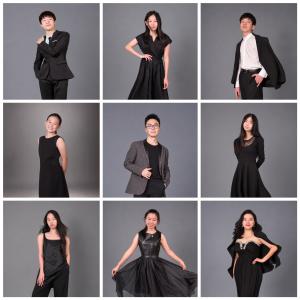
Eric HZ with young artists from Dallas Contemporary Music Academy (DCMA)—Thomas Wu, Bella Grace Xie, Yuni Guan, Mia Zhang, Isabella Ruoxi Hu, Grace Wang, Derek Li, and Feiyin Wu—featured guest performers at the 21st Chinese American Film Festival Golden Angel Awards .
Also worth a look: Track Review: Doechii “Denial Is a River” Is a Lyrical Tour de Force and Track Review: Rosalia “Abismo” Merges Flamenco and Industrial Electronics.

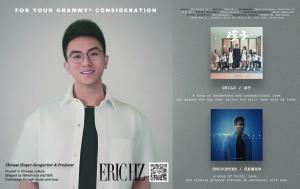
Eric HZ(Hechen Zhao)FYC
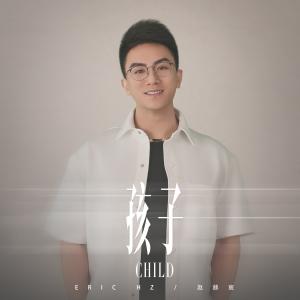
The team behind Eric HZ’s “Child”: Christian TJ (songwriter/producer), Zhonghao Zhang (arranger/producer), Chris Gehringer (mastering), Xianhua Zhang (mixing), and Xiaodong Xu (electric guitar).

As the GRAMMYs introduce Best Asian Pop Music Performance, Eric HZ reflects on Chinese-language music, cultural diversity, and opportunities for future artists.
A truly global music stage should not require everyone to have the same voice. It should have the capacity to understand different voices.”— Eric HZ (Hechen Zhao)DALLAS, TX, UNITED STATES, October 15, 2026 /EINPresswire.com/ —
Part IV — A Global Stage for Different Voices
As the GRAMMYs introduce Best Asian Pop Music Performance, Eric HZ reflects on Chinese-language artistry, cultural diversity, and opening doors for the next generation.
The new award category at the 69th GRAMMY Awards represents more than a ceremonial nod—it signals a structural shift in how the Recording Academy views music from Asia. Eric HZ, a Chinese singer-songwriter based in the Dallas area, sees this as a chance for music rooted in different Asian languages and traditions to finally reach audiences far beyond their home regions.
In the concluding part of his reflections on vocal artistry and cross-cultural listening, he considers what a global music community should value—and how that outlook informs his work with emerging artists.
Recognizing the Diversity of Asian Music
“I am sincerely grateful to the Recording Academy for its growing recognition of Asian music,” Eric HZ said. “The introduction of Best Asian Pop Music Performance not only creates new opportunities for Asian music to gain international visibility, but also opens broader possibilities for understanding and exchange among musical cultures.”
He also offers a respectful suggestion for the future:
“As Asian music continues to develop, I hope the GRAMMYs will explore the possibility of introducing additional categories that reflect its diversity, with careful consideration of artistic distinctions, industry development, and the requirements of professional evaluation.”
He believes the richness of Asian music cannot be fully represented by a single category. Longstanding musical traditions, evolving contemporary expressions, and different languages and practices all contribute to its vitality.
“I believe a mature international system of musical recognition should not only celebrate outstanding works that have already achieved widespread success, but also create greater opportunities for dedicated singers, songwriters, producers, and other behind-the-scenes music professionals whose work has not yet received broad commercial recognition to be discovered and understood on their artistic merits.”
Chinese Cultural Identity and International Exchange
“I come from China, and I deeply cherish the cultural heritage of Chinese civilization, shaped by millennia of history. This profound heritage is part of my cultural and spiritual foundation, and it continues to shape my songwriting and artistic expression.”
“I sincerely admire the achievements of K-pop and J-pop on the international stage. At the same time, I hope the world will come to know C-pop more deeply and appreciate the distinctive and diverse artistic expressions of Chinese-language music.”
“Different musical cultures should not seek to replace one another. They should inspire and enrich one another. Meaningful international exchange is not about making all music sound alike, but about allowing different cultures to participate in a global conversation through their own artistic languages.”
Making Room for the Next Generation
His hopes for emerging artists also take practical form in his Mandarin-language song “Child,” submitted for consideration in Best Asian Pop Music Performance at the 69th GRAMMY Awards. Its background vocals include young artists from Dallas Contemporary Music Academy (DCMA) whom he has mentored.
In a message to these young collaborators, Eric HZ wrote:
“Your dreams are worth believing in.
Your voices deserve to be heard.
You are not simply the voices behind Child.
You are part of its story.”
“For independent artists like myself who are still exploring and developing our creative paths, my hopes extend beyond personal recognition. I hope that through the efforts of our generation, more artists in the generations to come will have opportunities to share their talents, express their cultural identities, and participate in international artistic exchange.”
“The future I envision for Asian music is not one in which every voice becomes the same, but one in which every voice of artistic merit has the opportunity to be understood by the world in its own language.”
“This is my sincere hope as a Chinese musician—for music, for culture, and for the next generation of artists.”
Artistic Standards, Understanding, and Humility
“I hope we always remember that the internationalization of music should not come at the expense of artistic diversity.”
“Learning from different musical traditions and embracing advances in technique and production are important forces in artistic development. But the purpose of international exchange should not be to make everyone sing in the same way.”
“I value the new platform the Recording Academy has created for Asian popular music, and I respect every artist who works sincerely through their own language and artistic practice.”
“I hope our industry will continue discussing how we can maintain rigorous professional standards while developing a deeper understanding of musical expression across languages and cultures.”
For Eric HZ, mature artistic judgment requires knowledge and experience, but also humility about what remains unfamiliar.
“We can uphold artistic standards while recognizing the limits of our own experience. We can appreciate music that is familiar to us while remaining willing to understand sounds and traditions we have yet to encounter.”
“The rigor of artistic judgment lies not in never questioning our conclusions, but in being willing to continually examine them.”
Why Do We Sing?
Regardless of how awards and recognition may change, Eric HZ believes artists must return to a fundamental question:
“Why do we sing?”
“I believe we sing not only to reveal the beauty of the human voice, but also to express the experiences of life that deserve to be cherished, and to create greater understanding between people.”
“Music does not need to erase the differences between languages in order to bring people closer together.”
“A truly global music stage should not require everyone to have the same voice. It should have the capacity to understand different voices.”
About Eric HZ
Eric HZ is a Chinese singer-songwriter, vocalist, and music producer based in the Dallas, Texas area. He studied under Chinese opera performer and vocal educator Professor Wan Shanhong. He is the founder and chairman of the Chinese-American Federation of Arts and Culture (CAFAC), and the founder and executive producer of the Chinese American Music Festival (CAMF).
Listen to “Child”:
https://www.cafacofficial.org/eric-hz-child
Chris Jin
Chinese-American Federation of Arts and Culture
festival@cafacofficial.org
Visit us on social media:
YouTube
Eric HZ Performs “Child” at the 21st Chinese American Film Festival Golden Angel Awards
Why it matters: As the GRAMMYs broaden their categories to include Asian pop, artists like Eric HZ are pushing for recognition that doesn’t flatten the distinct traditions and languages of the region. His call for more nuanced categories and mentorship of young singers points to a future where international acclaim doesn’t require artists to abandon their cultural identity.