When every concert backdrop, retail video wall, and roadside billboard competes for attention, the hardware behind those visuals has quietly become a strategic business tool rather than a mere accessory. Shenzhen ABXLED Industrial Co., Ltd., a Chinese manufacturer based in Guangdong Province, is now broadening its lineup to serve a wider spectrum of professional visual communication needs — from temporary stage setups to permanent commercial installations.
The company’s portfolio spans stage rental screens, indoor displays, outdoor advertising panels, transparent LED options, and fully customized systems. Designed to fit varied installation environments, these products aim to support both event-based productions and fixed infrastructure projects, giving buyers a single source for equipment that must perform under different physical and operational demands.
The stage LED display sector is shifting as event organizers increasingly favor digital flexibility over static scenery. Unlike printed backdrops, LED panels allow production teams to swap video, graphics, live camera feeds, and branded messaging mid-event, enabling multiple atmospheres without reconstructing the physical set. Concerts, product launches, conferences, and exhibitions all stand to benefit from displays that heighten audience engagement and make critical information more visible.
Also worth a look: Track Review: Doechii “Denial Is a River” Is a Lyrical Tour de Force and Track Review: Rosalia “Abismo” Merges Flamenco and Industrial Electronics.
Yet selecting the right screen involves far more than comparing diagonal measurements. Pixel pitch, brightness, refresh rate, color consistency, cabinet engineering, installation constraints, and maintenance logistics all factor into real-world performance. Shenzhen ABXLED Industrial Co., Ltd. addresses these variables with offerings such as its Indoor LED Screen and Outdoor Advertising LED Display lines.
Meeting the Needs of Modern Stage Production
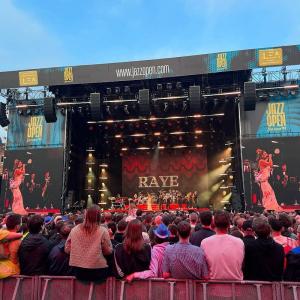
Stage LED displays serve multiple roles on site — as main backdrops, auxiliary side screens, or extended visual surfaces that wrap around a performance area. At concerts and festivals, they ensure audiences at various angles can follow the action and on-screen content. Corporate events rely on them for presentations, promotional clips, and product showcases, while exhibition organizers use them to draw foot traffic and relay information in crowded halls.
Rental use imposes its own discipline. Screens frequently must be assembled, dismantled, transported, and reinstalled within tight windows. Modular cabinets, robust locking systems, accessible service points, and standardized dimensions help production crews move faster and with fewer errors. The supporting structure also needs to match the display’s weight and mounting position — especially when panels are flown overhead, above performers or spectators.
For staging companies, the decision hinges on venue specifics, audience proximity, content resolution, and lighting conditions. A screen built for a massive outdoor festival will not necessarily suit a boardroom. Matching equipment to the job helps balance image fidelity, assembly speed, and project budgets.
Shenzhen ABXLED Industrial Co., Ltd. supplies displays for both touring and permanent stage environments. Its catalog gives event firms and system integrators multiple options to weigh against project demands. Buyers are advised to verify cabinet dimensions, pixel pitch, control-system compatibility, and maintenance terms before locking in a configuration.
Indoor LED Screen Solutions for High-Definition Visuals
Indoor LED displays now appear in conference rooms, broadcast studios, shopping centers, exhibition halls, hotels, retail outlets, and entertainment venues. These settings typically require crisp imagery at short viewing distances, elevating the importance of pixel pitch and color accuracy.
The Indoor LED Screen products from Shenzhen ABXLED Industrial Co., Ltd. target indoor communication and signage applications. Depending on the model, they can be deployed for corporate presentations, digital signage, indoor advertising, stage backdrops, or video walls.
Pixel pitch — the gap between adjacent pixels, measured in millimeters — determines how close viewers can stand before the image loses detail. Smaller pitches deliver sharper visuals at close range but often carry a higher price tag. Buyers must weigh intended viewing distance, screen size, content type, and budget when choosing.
Brightness also matters. Indoor screens need enough output to compete with ambient light without causing glare. Uniform color across cabinets is critical when panels are stitched into a large wall, and refresh rate plus grayscale depth influence how motion and subtle shading appear.
Maintenance planning should begin early. Front-service designs work well where rear access is impossible, while rear-service units suit installations with open space behind the display. Buyers should confirm how modules and components are swapped, how mounting will be handled, and whether routine inspections can be performed without disruption.
For event organizers, indoor LED screens offer the advantage of changeable content tailored to each client or program. Retailers and corporate users can refresh messaging without reprinting physical materials. Choosing the right setup ensures the screen meets both visual expectations and day-to-day operational needs.
Outdoor Advertising LED Display for Commercial Visibility
Outdoor environments impose a separate set of challenges. Displays mounted on commercial buildings, shopping streets, transit hubs, and public plazas must stay legible under shifting sunlight while enduring rain, dust, temperature swings, and wind loads.
The Outdoor Advertising LED Display products from Shenzhen ABXLED Industrial Co., Ltd. are aimed at businesses evaluating digital signage for exterior commercial use. Applications include building-mounted ads, commercial plazas, roadside locations, and other high-traffic areas where large-format visuals are needed.
Brightness is a primary concern for outdoor units. Content must remain readable in bright daylight, but luminance alone does not guarantee effectiveness. Pixel pitch, viewing distance, contrast, content design, and sun orientation all contribute to how well a message lands.
Environmental resilience is equally vital. Buyers should check each model’s ingress-protection rating, operating temperature range, cabinet build, and electrical safeguards. Equipment selection should reflect the site’s actual exposure to moisture, dust, and weather patterns rather than relying on generic marketing claims.
Structural safety cannot be overlooked. Large displays on facades or freestanding frames face significant wind pressure. The mounting structure, anchoring method, installation height, and local building codes should be reviewed by qualified engineers where needed.
Outdoor systems often need content-management tools for remote updates or scheduled ad rotations. Buyers should verify compatibility with their chosen video processor, controller, playback hardware, and software before committing.
For commercial operators, the long-term payoff of an outdoor LED screen depends on reliability, service access, energy use, and the ability to present content persuasively. A well-planned installation lets businesses rotate campaigns efficiently and maximize the value of available display space.
Customization and Project Integration
Few LED projects follow a one-size-fits-all template. A concert might call for a wide backdrop, curved sections, or extra side panels. A retail space may need a compact screen that fits a specific architectural niche, while an outdoor ad project could demand a massive structure with custom engineering.
Shenzhen ABXLED Industrial Co., Ltd. provides OEM and ODM services for clients with bespoke requirements. These options appeal to distributors, production companies, system integrators, and brands developing their own display products. Customization can cover specifications, screen layout, branding, or packaging, depending on the scope.
Successful customization starts with a precise technical brief. Customers should outline the application, screen dimensions, pixel pitch, viewing distance, installation method, operating conditions, and content strategy. Rental firms often prioritize low cabinet weight, fast assembly, and easy transport. Permanent installations may focus on structural integration, weather resistance, and serviceability.
Control-system compatibility needs confirmation prior to purchase. LED displays depend on proper sending and receiving cards, video processors, and source devices to render images correctly. Resolution needs, input ports, signal distance, and synchronization requirements all shape the final system design.
For international orders, packaging, delivery lead times, and documentation carry added weight. LED cabinets and modules need protective transit packaging, and project schedules must account for installation and commissioning. Clear dialogue among manufacturer, distributor, installer, and end user helps prevent costly delays.
Quality, Installation, and Maintenance
An LED display’s performance rests on component quality, production processes, installation precision, and ongoing upkeep. A large screen contains many modules, power supplies, connectors, and control boards that must work in concert to deliver consistent output.
Shenzhen ABXLED Industrial Co., Ltd. describes its operation as integrating research and development, manufacturing, sales, and after-sales support. Prospective buyers should request up-to-date specifications, certification documents, and inspection records as applicable. They should also pin down warranty coverage, spare-parts availability, and technical assistance terms.
Pre-installation reviews should cover the support structure, electrical supply, ventilation, cable routing, and service access. Outdoor jobs demand extra scrutiny of weather protection and structural safety, while rental displays require secure cabinet interlocks and dependable rigging.
Calibration is another essential step. Module-to-module variations can introduce brightness or color mismatches across a large screen. Proper calibration minimizes visible seams and elevates the overall picture. The exact procedure depends on the hardware and control system in use.
Routine maintenance includes checking connections, power supplies, airflow, cabinet integrity, and protective gaskets. Operators should follow the manufacturer’s guidance for cleaning, fault-finding, and part replacement. For event firms and ad operators, responsive technical support is invaluable — downtime can disrupt a scheduled show or a paid campaign.
The Outlook for Stage LED Display Manufacturers
LED technology keeps evolving alongside rising demand for digital advertising, live entertainment, and immersive communication. Buyers now weigh not just image quality and upfront cost but also energy efficiency, service access, replacement parts, installation time, and long-term running expenses.
No single display fits every scenario. Stage rental units must tolerate repeated handling and transport; indoor models usually prioritize detail; outdoor systems need robust brightness and environmental endurance. Careful selection lets customers reconcile these demands with their budgets and operating realities.
Shenzhen ABXLED Industrial Co., Ltd. participates in this market with a broad range of LED solutions spanning stage production, indoor communication, and outdoor advertising. Its Indoor LED Screen and Outdoor Advertising LED Display products address distinct usage cases, enabling customers to compare options against their project goals.
For prospective buyers, the smartest path is to define the installation environment, audience distance, screen dimensions, content needs, and maintenance schedule before evaluating suppliers. Scrutinizing technical specs and service terms helps ensure the chosen system holds up over years of use.
About Shenzhen ABXLED Industrial Co., Ltd.
Shenzhen ABXLED Industrial Co., Ltd. is a China-based LED display manufacturer headquartered in Shenzhen, Guangdong Province. The company supplies displays for stage rental, commercial advertising, retail, exhibitions, sports, and other visual communication fields. Its catalog includes stage rental LED screens, Indoor LED Screen products, Outdoor Advertising LED Display solutions, transparent LED displays, stadium screens, poster displays, and custom LED units. The firm also offers OEM and ODM services for project-specific needs. Its solutions are used at concerts, conferences, shopping centers, exhibitions, and outdoor ad sites. Buyers can reach the company for specifications, customization options, installation guidance, and after-sales support. More details are available on its official website: www.abxled.com.
Address: Building E, Diweixin Industrial Park, Beihuan Road, Shiyan, Baoan District, Shenzhen city, Guangdong Province, China
Official Website: https://www.abxled.com/
Huo Long
Shenzhen ABXLED Industrial Co., Ltd.
Sales01@abxled.com
Why it matters: As LED screens become the default medium for live events, retail spaces, and outdoor advertising, the choice of display hardware increasingly determines both audience impact and operational efficiency. ABXLED’s push across multiple application categories signals that manufacturers must now deliver specialized, serviceable, and customizable systems — not just panels — to stay competitive in a market where uptime and adaptability are the true differentiators.