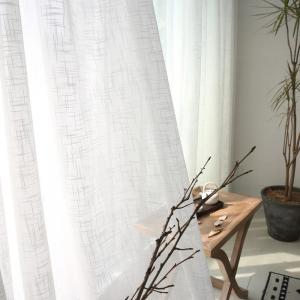
Curtains are no longer just a decorative afterthought in interior design—they are now a critical component of building performance, affecting light control, privacy, and even thermal comfort. Recognizing this shift, Suzhou Chengyuda Textile Co., Ltd. is broadening its global footprint in the curtain and home textile market, offering a full range of products from fabrics to hardware for spaces as varied as private homes, hotels, offices, theaters, schools, hospitals, and public venues. The company’s portfolio, which includes Curtain Fabric and Curtain Track, is designed to help buyers create coordinated window treatment systems that balance aesthetics with practical needs like light management and ease of operation.
Curtains Play an Increasingly Multifunctional Role in Interior Design
The role of curtains has evolved far beyond simply covering a window or ensuring seclusion. In contemporary architecture, they are instrumental in managing daylight, minimizing glare, enhancing indoor comfort, and reinforcing the design language of a space. Depending on the fabric and its construction, curtains can also play a part in thermal regulation, acoustic control, and dividing large areas.
Also worth a look: Track Review: Doechii “Denial Is a River” Is a Lyrical Tour de Force and Track Review: Rosalia “Abismo” Merges Flamenco and Industrial Electronics.
Homeowners, for instance, typically focus on color, texture, and how easily the curtains can be cleaned, making sure they match the room’s furniture and flooring. A bedroom often calls for superior light-blocking capabilities, whereas a living room might benefit from a balance between diffused sunlight and privacy. In the hospitality sector, curtains must offer a consistent look across all rooms while withstanding the wear and tear of frequent guest use and rigorous cleaning schedules.
Commercial settings bring their own set of challenges. Office spaces might require curtains that cut down screen glare, while theaters and event halls need fabrics that perform well under stage lighting and specific presentation conditions. Healthcare facilities, on the other hand, often rely on specialized curtains to create privacy between beds or in treatment zones. Each of these scenarios demands a thoughtful evaluation of the fabric, the mounting system, and the specific environment where the product will be installed.
Suzhou Chengyuda Textile Co., Ltd. is addressing this complexity by offering a wide array of curtain products designed for various applications. Their catalog includes sheer, dimout, blackout, velvet, chenille, medical, and stage-related textiles, reflecting the diverse demands placed on suppliers by residential, hospitality, institutional, and entertainment markets.
Curtain Fabric: Combining Appearance and Performance
The fabric is the very essence of a curtain, and its composition—including the type of fiber, weave, weight, texture, and finishing process—determines both how it looks and how well it functions. Choosing the right material is a critical step for interior designers, contractors, distributors, and retailers alike.
Sheer fabrics are a popular choice for softening natural light while retaining a sense of openness. They work well in living rooms, lobbies, and hospitality areas, creating an airy feel. Often, sheers are layered with heavier drapes to offer more privacy when necessary.
Dimout fabrics are engineered to cut down on light penetration, though their effectiveness can vary based on how they are made. These are often used in bedrooms, hotel rooms, and meeting spaces where reducing brightness is key, but complete darkness is not required.
For scenarios demanding stronger light exclusion, blackout fabrics are the go-to option, frequently specified for bedrooms, hotels, media rooms, and certain commercial settings. Buyers are advised to check the specific light-blocking claims of a product and consider how the fabric weave, seams, and installation gaps will affect the final outcome.
Velvet and chenille add a layer of textural richness to interiors. Velvet is often linked with formal or theatrical environments, while chenille is prized for its soft, tactile surface. The right choice depends on the desired look, fabric weight, durability, maintenance needs, and where it will be installed.
Suzhou Chengyuda Textile Co., Ltd. provides a range of curtain fabric categories to meet these varied demands. For project buyers, having this variety simplifies the process of comparing materials for a specific design concept. Instead of choosing fabric based only on looks, purchasers should weigh the required light control, weight, color consistency, cleaning method, and how often the curtains will be used.
Finishing treatments can also play a significant role in fabric performance. Depending on the product, finishes might be applied to meet particular requirements, such as flame retardancy. If a project requires certified performance, buyers must check the relevant test reports, certification scope, and applicable standards for the exact fabric they intend to purchase.
The Importance of Curtain Track Systems
Even the finest fabric will not function properly without a suitable installation system. Curtain Track is the mechanism that supports and moves the curtain across a window or opening, and its design impacts the smoothness of movement, installation flexibility, and overall appearance. The track must also be able to handle the weight of the fabric.
A well-chosen track system ensures curtains glide open and shut easily while looking tidy. Tracks can be mounted on ceilings or walls, depending on the product and the building’s layout. While straight tracks are suitable for most standard windows, flexible or bendable systems are sometimes needed for curved openings or more complex designs, provided the track is specifically designed for that purpose.
Matching the track to the curtain’s dimensions and weight is essential. A lightweight sheer curtain will have different hardware requirements than a heavy velvet or stage drape. Considerations such as track length, number of brackets, mounting surface, and how the curtain is operated should all be reviewed before installation. For large or frequently used curtains, the load capacity and sturdiness of moving parts become particularly important.
In commercial and institutional settings, track systems are just as vital as the fabric itself. In hotels, conference centers, hospitals, and theaters, curtains are opened and closed many times daily, so a robust track system is necessary to support regular use and minimize maintenance issues.
For those looking at Curtain Track products from Suzhou Chengyuda Textile Co., Ltd., the key is to ensure the chosen system is compatible with the fabric and the environment. Buyers should discuss product dimensions, mounting arrangements, operating requirements, and how the track fits with the finished curtain before placing a project order.
Integrating Fabric and Hardware for Better Project Outcomes
When sourcing curtains, it is most effective to view the fabric and hardware as a single, integrated system. A heavy material paired with a flimsy track will lead to operational problems, and an installation system that does not align with the curtain’s measurements can spoil the final look.
Project planning should begin with defining the purpose of each window treatment. Designers and buyers need to determine whether the priority is diffusing daylight, ensuring privacy, blocking light, decoration, stage use, or some other specific need. These objectives will guide the fabric selection and the appropriate curtain construction.
Precise measurement is another non-negotiable step. Buyers must confirm the width of the window or opening, the available mounting area, the required curtain drop, and the stacking space needed when the curtains are drawn open. The track or pole should be measured following the manufacturer’s instructions, with allowances for brackets, end stops, overlaps, and other installation details.
The curtain heading, or the top edge of the fabric, also affects the final appearance. Options like rod pockets, grommets, back tabs, and pleated headings create different looks and may require different installation setups. The heading must be compatible with the chosen track or pole and support the desired movement and fullness.
Suzhou Chengyuda Textile Co., Ltd. offers product details and customization options for buyers exploring different curtain styles and fabric needs. Their online information covers color customization, ready-made goods, and made-to-order designs. For bespoke projects, buyers should confirm minimum order quantities, sample availability, lead times, color specifications, and the exact scope of customization directly with the supplier.
Supporting Hospitality and Commercial Projects
Hotels, theaters, offices, schools, and healthcare facilities often require curtains in far larger quantities than a single residence. In these settings, consistency, delivery coordination, durability, and maintenance planning heavily influence purchasing decisions.
Hotels, for example, might use different curtain types in bedrooms, meeting rooms, restaurants, and public spaces. Blackout curtains are often favored for sleeping areas, while dimout or decorative fabrics might be used in lobbies and lounges. Coordinated colors and matching hardware help maintain a unified design across all rooms.
Theaters and event venues have distinct priorities. Stage curtains may require heavy fabric, specific draping qualities, and verified flame-performance properties to meet venue regulations. The track system must also be chosen based on the curtain’s size, weight, and how often it is used. Any claims about fire safety must be confirmed as applying to the exact product and meeting local codes.
Medical environments need curtains that prioritize privacy and can withstand regular cleaning. Procurement teams should consider the intended location, cleaning procedures, how often the curtains will be replaced, and any hygiene or performance specifications. If special certifications are needed, the documentation should be reviewed before installation.
By offering a broad range of curtain categories, Suzhou Chengyuda Textile Co., Ltd. gives buyers options for various project types. However, successful delivery depends on a detailed specification process that covers fabric performance, dimensions, hardware compatibility, delivery schedules, installation needs, and after-sales support.
Manufacturing, Customization, and Quality Considerations
Curtain production is a complex chain of interconnected steps, from yarn preparation and weaving or knitting to dyeing, finishing, cutting, sewing, and final inspection. The specific route depends on the fabric type and finished product. Effective coordination across these stages is crucial for maintaining consistent color, dimensions, texture, and construction quality.
Suzhou Chengyuda Textile Co., Ltd. highlights its experience across the textile supply chain, from weaving to sewing, and notes its collaboration with manufacturing partners for various production needs. The company also offers OEM and ODM services, which are valuable for distributors, brands, design firms, and contractors seeking customized products.
Customization can involve color, fabric structure, dimensions, curtain headings, and other product details. For substantial orders, it is wise to approve samples before mass production. A physical sample lets the buyer evaluate the material’s appearance, hand feel, color, drape, and how well it works with the planned installation system.
Quality control should go beyond a simple visual check. Depending on the product, inspections might include measuring dimensions, checking seams, identifying fabric defects, verifying color consistency, testing track operation, and confirming performance characteristics. Clear acceptance criteria are essential to prevent misunderstandings between the supplier and buyer.
For commercial projects, purchasers should also plan how products will be packaged, labeled, and delivered. Curtains and fabrics may need to be sorted by room, floor, or installation phase. Clear documentation and organized packing help installation crews work more efficiently and reduce mistakes on site.
Meeting International Buyer Expectations
As curtain and home textile sourcing becomes increasingly global, communication and documentation are vital when evaluating suppliers. Importers and project contractors need precise specifications, transparent pricing, realistic lead times, and a dependable process for managing samples and production approvals.
Export projects may also need to comply with regulations in the destination country or with project-specific requirements. Claims about flame retardancy, textile safety, recycled content, and other features should be backed by documentation that applies to the specific item. Buyers should verify the certificate or test report’s validity and the standards it covers, rather than assuming one document covers an entire product line.
Suzhou Chengyuda Textile Co., Ltd. reports working with customers in international markets, including North America, Europe, and Asia. For those considering a long-term partnership, a structured review of product capabilities, production arrangements, sample quality, communication, and after-sales support can help determine if the supplier is the right fit.
As interior design continues to emphasize both aesthetics and practical performance, curtain products must rise to meet a wide range of expectations. The fabric choice defines the visual character and light-control performance, while the track system ensures smooth daily operation. Treating these elements as one coordinated solution helps buyers achieve more consistent results across all types of projects.
About Suzhou Chengyuda Textile Co., Ltd.
Suzhou Chengyuda Textile Co., Ltd. is a textile company based in Suzhou, Jiangsu Province, China, specializing in curtain and home textile products for both domestic and international customers. Its product portfolio includes sheer curtains, dimout curtains, blackout curtains, velvet curtains, chenille curtains, medical curtains, stage curtains, Curtain Fabric, and Curtain Track. The company cites its experience across textile production processes, from weaving to sewing, and offers OEM and ODM services for clients with specific design and project needs. Their products are intended for use in homes, hotels, offices, theaters, schools, hospitals, and other public or commercial environments. Buyers looking for product details, customization options, or project quotes can visit the official website at www.cyd-curtain.com.
Address: Room 308, Block B, Kelaimei Building, No. 819 Shengtan Road, Shengze Town, Wujiang District, Suzhou City, Jiangsu Province
Official Website: https://www.cyd-curtain.com/
Yafeng Huang
Suzhou Chengyuda Textile Co., Ltd.
asher@cydtextile.com
Why it matters: As global construction and renovation projects continue to demand higher-performing interior materials, the integration of fabric and hardware is becoming a key factor in procurement success. Suppliers like Suzhou Chengyuda that offer a comprehensive, coordinated product range are well-positioned to help buyers streamline specification, ensure quality, and meet diverse regulatory and functional requirements across international markets.